The short answer
Clipping can lift streams, but a view on a clip isn’t a stream. It puts a song in front of millions of people in the right context, and some of them go find it. How much that moves streams depends mostly on whether the campaign targets a community that already fits the song.
It’s the first question every label asks, and it deserves a straight answer: clipping doesn’t press play for anyone. A view on a clip isn’t a stream. What clipping does is put a song in front of millions of people in the right context, and some of them go find it.
Whether that turns into streams depends almost entirely on how the campaign is set up.
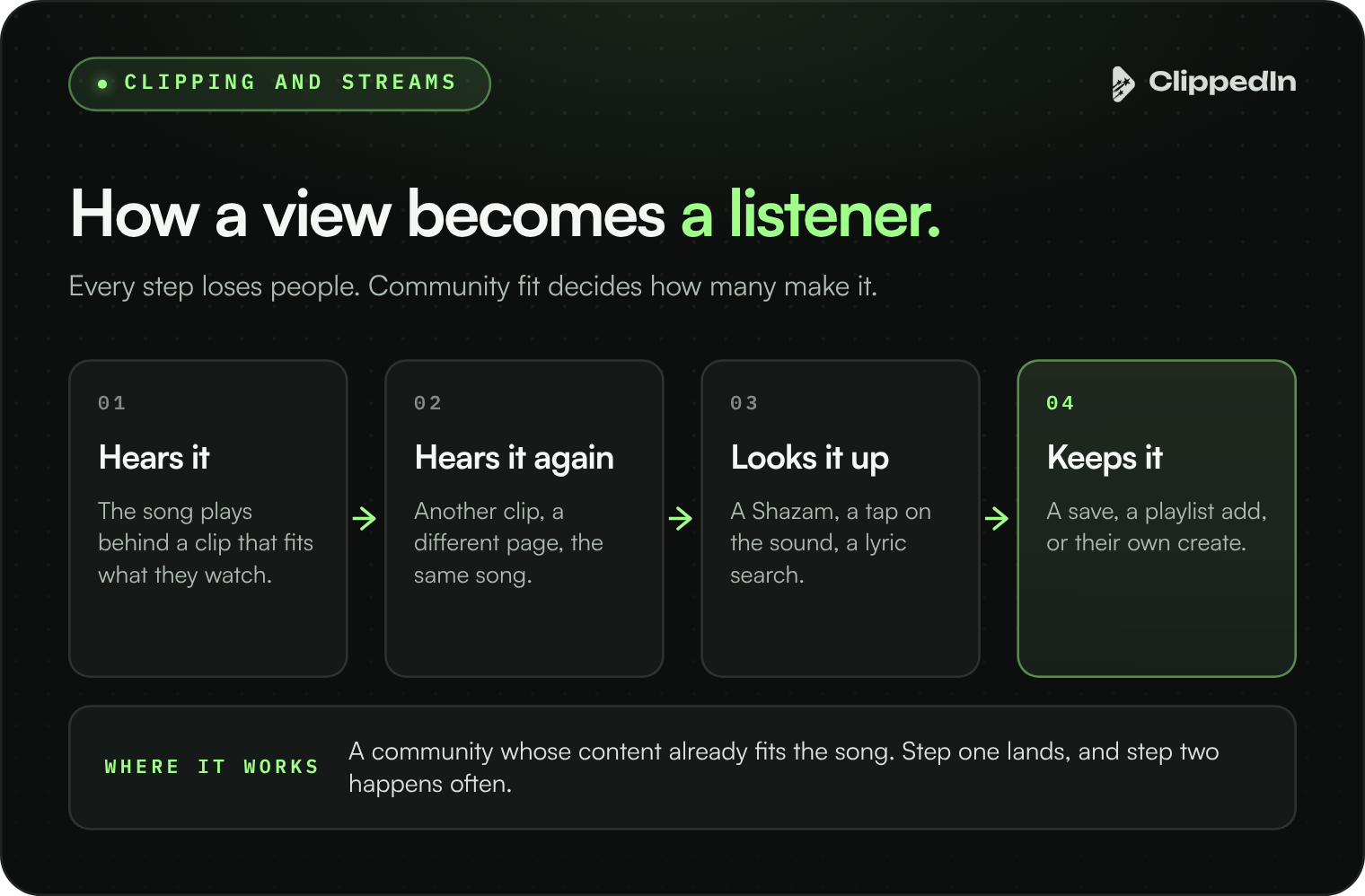
How does a view become a listener?
- Someone hears the song behind a clip that fits what they already watch.
- They see it again on another clip, from a different page.
- They Shazam it, tap the sound, or search the lyrics.
- They save it, add it to a playlist, or use the sound in their own post.
Every step loses people. The campaigns that move streams are the ones that make step one land with the right audience, and make step two happen often.
Why does community fit matter more than views?
Clipping doesn’t map one to one onto streams. Where it works is when the campaign targets a community whose content already fits the song, because that’s the audience most likely to save it and put it in their own playlists.
So every campaign we pitch starts with the lane: which subniche is growing right now, and why this song belongs there. A moody track behind travel edits. A high energy track behind sports edits. Our World Cup campaign put songs behind football edits during the tournament, so the views came from people already watching that content.
Is sound led or footage led better for streams?
There are two ways to run a music campaign.
Sound led. The song is the audio behind a mood, and clippers build visuals from their own footage in niches where that mood performs. Low lift for the artist, built for reach, and the song is the star of every clip.
Footage led. Clippers cut the artist’s own live footage, interviews and behind the scenes content. It builds familiarity with the artist, but it needs a content bank and it moves slower.
If the goal is streams, we recommend sound led. The more often someone hears the song in different contexts, the more likely they go looking for it. More in How Music Clipping Campaigns Work.
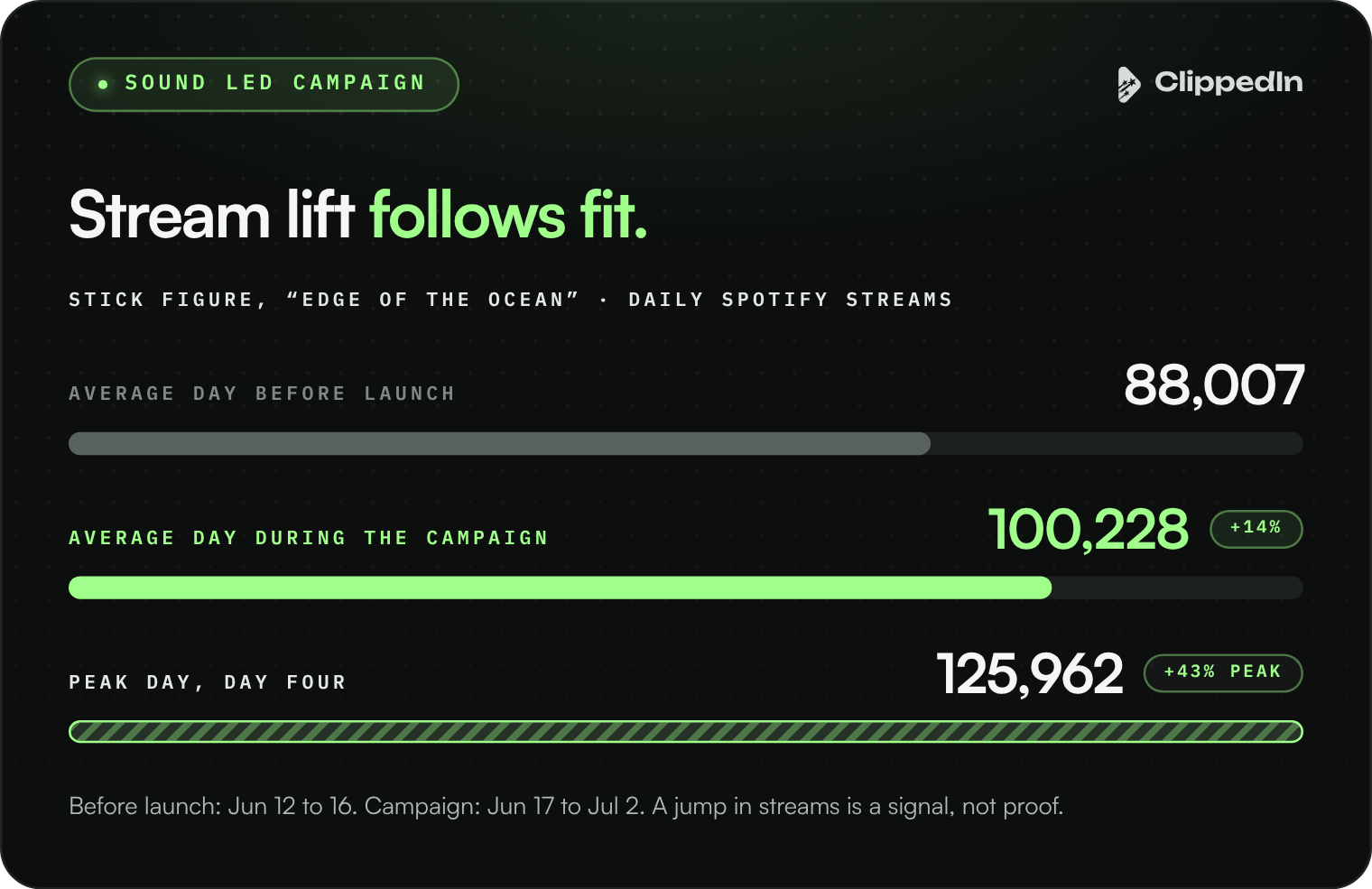
Here’s what that looked like for Stick Figure’s “Edge of the Ocean.” Before launch, the song averaged 88,007 Spotify streams a day. During the campaign, the average day rose to 100,228, up 14%, and the peak day hit 125,962, up 43%. Other things can lift streams in the same week, so a jump is a signal, not proof.
What should labels measure?
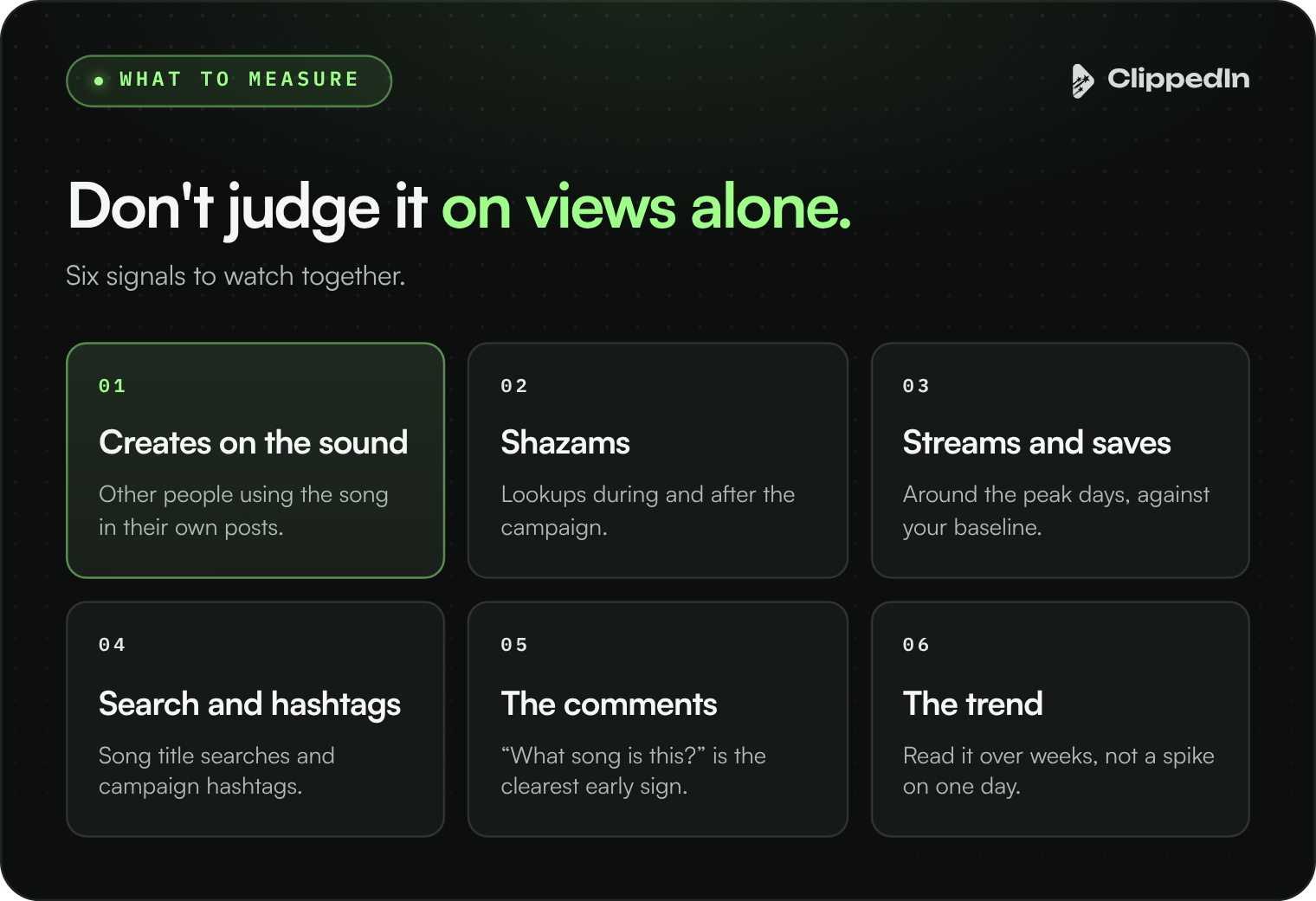
Don’t judge a music campaign on views alone. Watch these together:
- Creates on the sound: other people using the song in their own posts.
- Shazams during and after the campaign.
- Streams and saves around the campaign’s peak days, against your baseline.
- Search and hashtags: searches for the song title and use of the campaign hashtags.
- Comments asking for the song name. The clearest early sign the song is landing.
Read them as a trend over weeks, not a spike on one day.
How long does a campaign take?
Most campaigns go live about three days after the brief is set. A budget can be paid out in three days or last a month. Clips stay live after that and keep picking up views, so discovery keeps happening after the spend stops. That’s part of why AURORA’s “Runaway” campaign came in at $0.27 per 1,000 verified views as of September 23.
Frequently asked questions
Does clipping guarantee streams?
No. Clipping doesn’t map one to one onto streams. It works when the campaign targets a community whose content already fits the song, because that audience is most likely to save it and put it in their own playlists.
Which kind of campaign is best for streams?
We recommend sound led. The more often someone hears the song in different contexts, the more likely they go looking for it.
How much can streams rise?
For Stick Figure’s “Edge of the Ocean,” the average day rose from 88,007 to 100,228 Spotify streams, up 14%, and the peak day hit 125,962, up 43%. Other things can lift streams in the same week, so a jump is a signal, not proof.
What is the earliest sign a song is landing?
Comments asking for the song name.
How soon can a campaign start?
Most campaigns go live about three days after the brief is set.
What should labels actually expect?
- Reach at a low cost per view. That part is predictable.
- Discovery inside a specific community, when the lane is chosen well.
- Stream lift that follows fit, not raw views. A smaller campaign in the right lane will beat a bigger one in the wrong lane.
Got a release coming up? Send us the song, and on a call we’ll show you the community we’d target and the data behind it.